
🧑🌾 Ethnographic Research and Co-Design for Local Economic Growth
Resignifying Hñähñu Artisans Through Co-Design & Fair Market Access
🌵Overview
Valle del Mezquital, Hidalgo is one of Mexico's most marginalized regions, where Hñähñu (Otomí) indigenous artisans producing traditional ixtle fiber crafts faced systematic economic exploitation. Despite possessing centuries-old ancestral knowledge and creating high-quality handmade products, 37 artisan families lived in subsistence conditions due to extractive intermediary chains that paid producers $270 MXN for goods resold in Mexico City for nearly $400 MXN—capturing $100+ profit margins without adding value or recognizing the labor-intensive processes behind each piece.
Role
Ethnographic Researcher & Community Strategist
Community Developer (Full-time)
Responsibilities
Lead long-term ethnographic research in indigenous communities
Design and facilitate participatory workshops for organizational capacity building
Synthesize qualitative data into actionable insights and intervention strategies
Create multi-format educational materials (audiovisual, graphic, print)
Organize and execute fair-trade expo-sales connecting producers with conscious consumers
Coordinate multi-stakeholder initiatives (NGO, artisans, buyers, institutions)
Timeline
11-month intensive project
Discovery & Diagnosis: 4 months (Aug-Nov 2017)
Co-Design & Capacity Building: 3 months (Dec 2017-Feb 2018)
Implementation & Market Access: 4 months (Mar-Jun 2018)
Continuous Evaluation: Throughout entire project
Full-time: Aug 2017 - Jun 2018
(Previous volunteer work: May-Jul 2017)
Tools
Research:
Semi-structured interview protocols
Participant observation field notes
Audio/video documentation
Affinity mapping (manual synthesis)
Process mapping (collaborative)
Journey mapping (artisan-to-consumer)
Design & Communication:
Adobe Creative Suite (with graphic designers)
Video production & editing - Finalcut
Infographic design tools
Photography documentation (200+ images)
Project Management:
Monthly ethnographic reports
Quarterly impact reports
Meeting minutes & documentation
Multi-actor coordination systems
Process
From Volunteer to Researcher
I joined Cooperación Comunitaria AC (an NGO improving living conditions in rural communities through sustainable self-management) as a volunteer in May 2017. After three months of immersion, I was hired full-time as Community Developer to lead: "Increasing self-sufficiency of artisans from Cardonal, Hidalgo communities through strengthening their economic and organizational capacities."
Rather than treating this as a typical capacity-building project, I recognized a critical research opportunity: Could rigorous ethnographic research reveal systemic barriers preventing indigenous artisans from capturing fair value for their labor, and could community-centered co-design generate sustainable economic solutions?
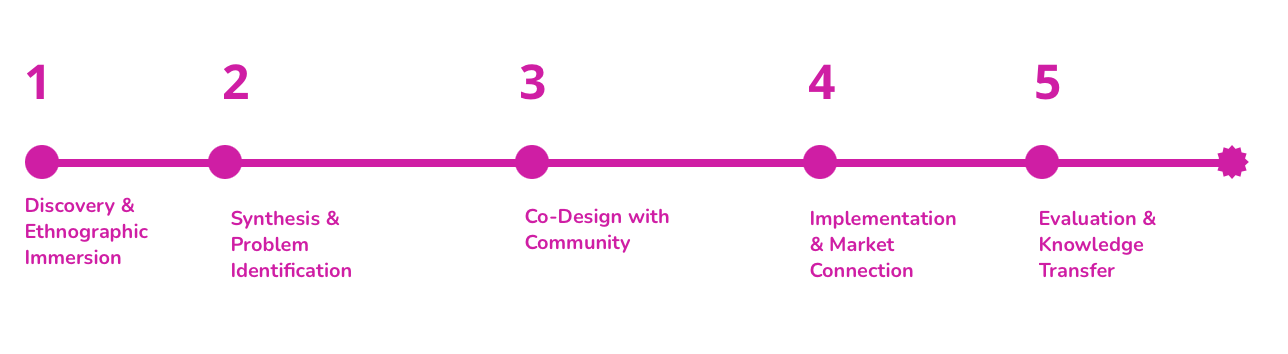
01.Discovery & Ethnographic Immersion
Cultural Heritage Under Threat
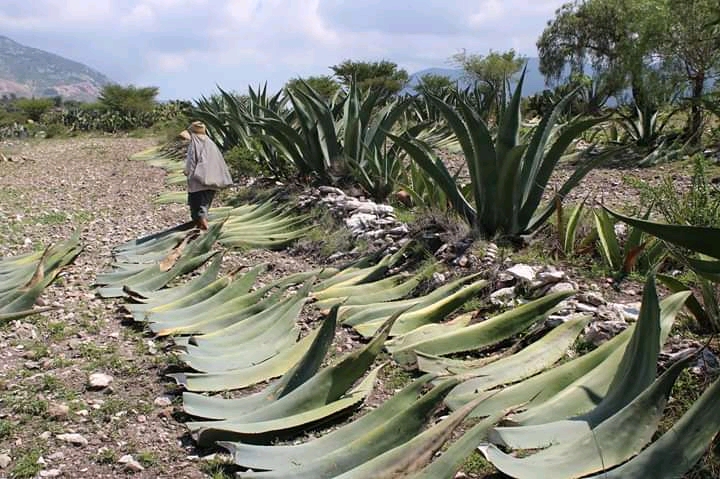
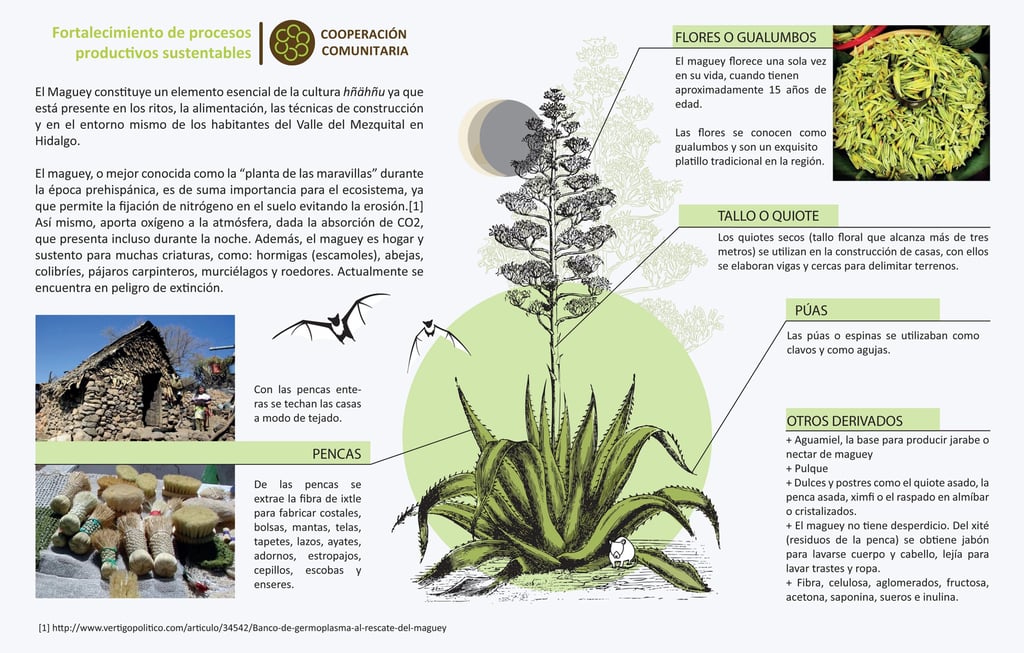
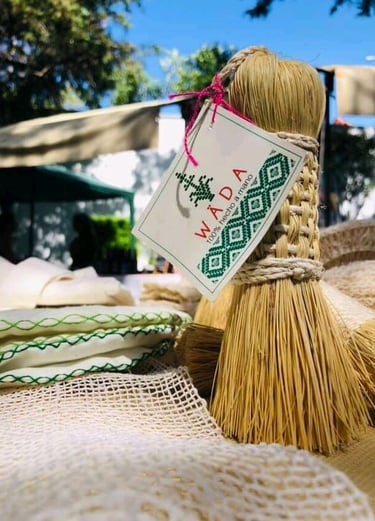
For centuries, the Hñähñu people have utilized maguey (agave), calling it the "tree of wonders." The ixtle fiber—extracted from agave lechuguilla and salmiana—was traditionally used for rituals, clothing, household items, construction, and generated sustainable local economy.
However, traditional productive activities had nearly disappeared due to:
1. Exploitation by Dishonest Intermediaries
Artisans sold ixtle/finished products as raw materials without added value
Unfair trade: Intermediaries paid minimal fractions of final value
Concrete example: Producers received $270 MXN for products resold in CDMX for nearly $400 MXN, with intermediaries capturing $100+ margins
2. Displacement by Plastics
Low-cost synthetic materials replaced natural fibers
Loss of traditional techniques and knowledge
3. Lack of Access to Fair Markets
Artisans couldn't position products in urban conscious consumer markets
Complete dependency on intermediaries for commercialization
4. Invisibilization of Value
Urban buyers unaware of labor-intensive processes (days/weeks of manual work)
Cultural significance and ancestral knowledge unrecognized
2. Synthesis & Problem Identification
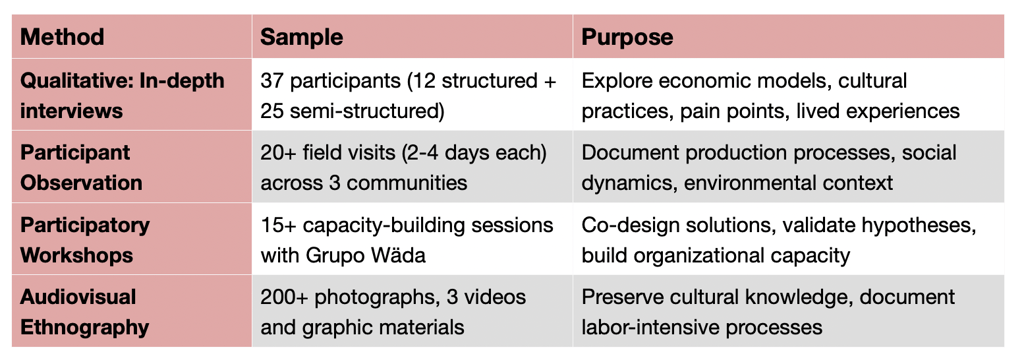
Mixed-Methods Ethnographic Approach
🧩 Synthesis
Critical Pain Points Identified
Through affinity mapping of 37 interview transcripts and field notes, I synthesized recurring patterns into three systemic barriers:
Synthesis: The Systemic Problem
Economic Exploitation + Cultural Invisibilization + Organizational Fragmentation = Persistent Poverty Despite Valuable Production
This wasn't a "skills deficit" problem—artisans possessed world-class ancestral techniques. This was a market access + information asymmetry + power dynamics problem that required systemic intervention, not just training.
Key Insight: Solutions imposed externally would replicate extractive dynamics. The path forward required co-designed interventions where artisans themselves identified priorities and designed solutions.
The Core Problem Identified
Despite possessing valuable ancestral knowledge and producing high-quality crafts, Hñähñu artisan families lived in subsistence conditions because extractive commercial chains did not recognize their labor nor preserve their cultural heritage.
This became an exploration in economic anthropology—understanding how cultural invisibilization enables economic exploitation, and how ethnographic research can reveal pathways to economic justice.
Research Protocol
Phase 1: Ethnographic Immersion (Aug-Nov 2017)
Intensive Fieldwork:
Conducted 37 in-depth interviews with artisan families (68% women, 32% men, ages 25-70)
20+ recurrent visits to 3 communities: La Vega, El Decá, Pozuelos
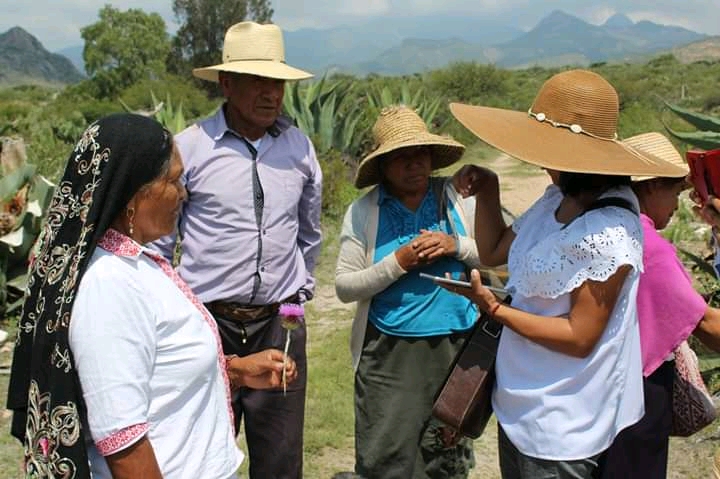
2-4 days per visit living in communities, observing daily life and production processes
Techniques Employed:
Bilingual interviews with elders (Spanish-Hñähñu with local translator support)
Think-aloud protocols during production processes
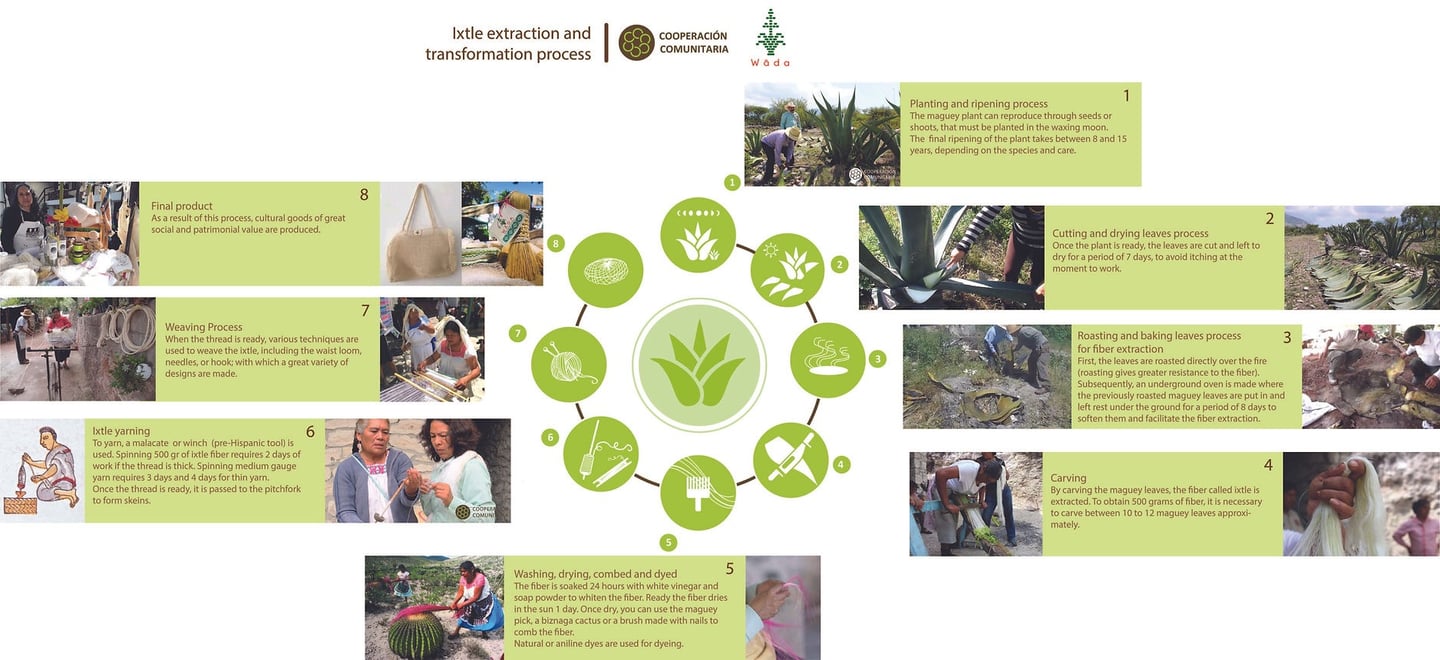
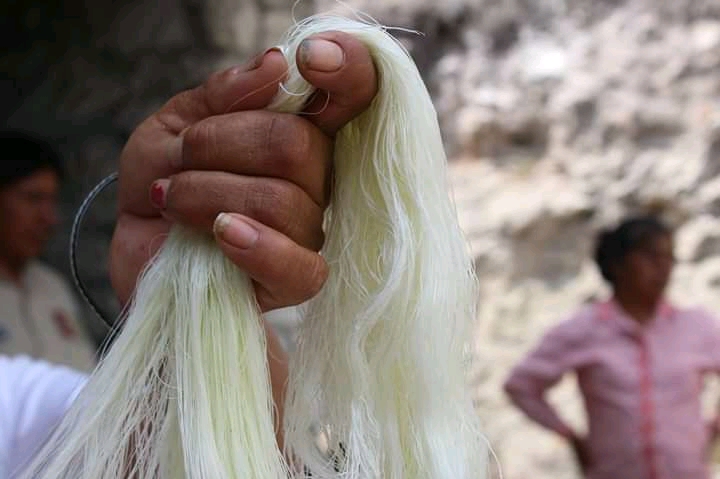
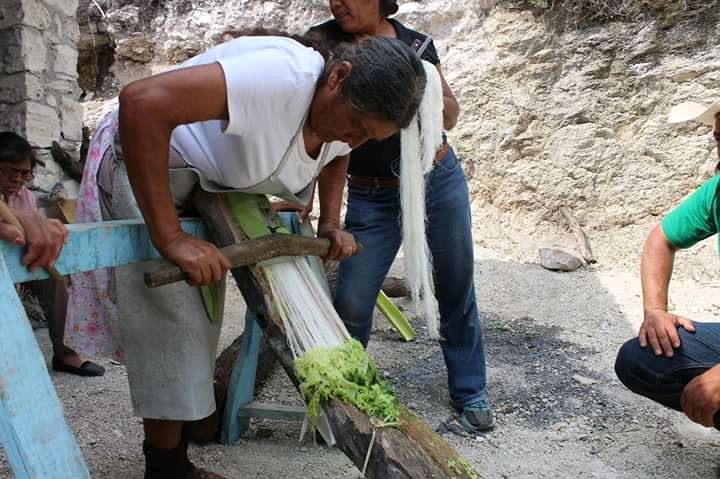
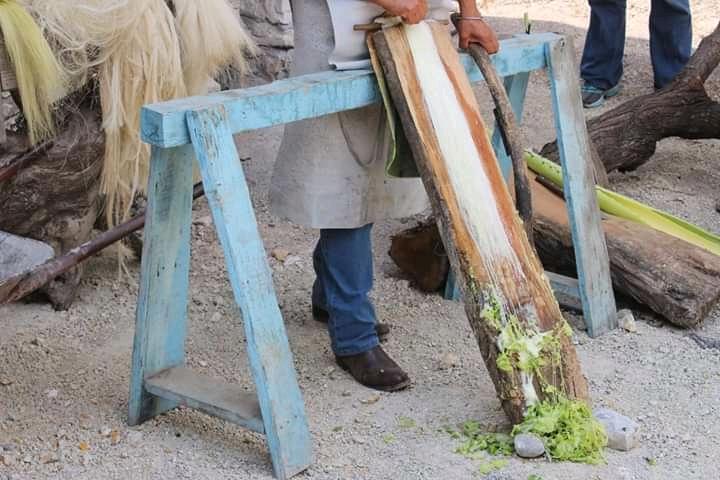
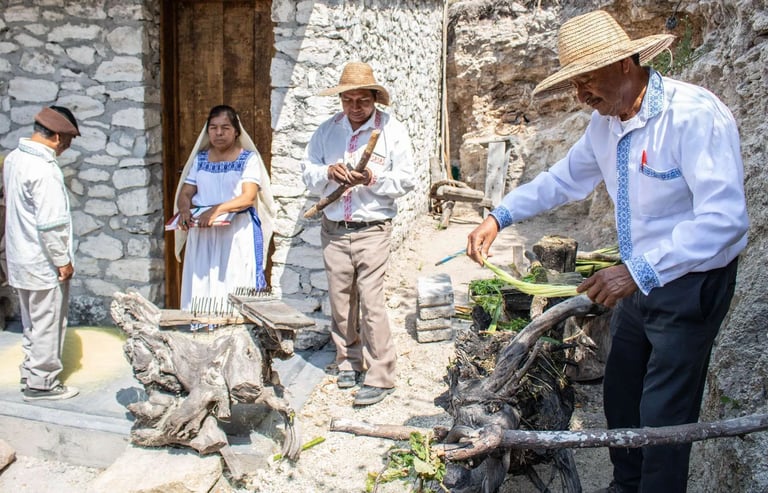
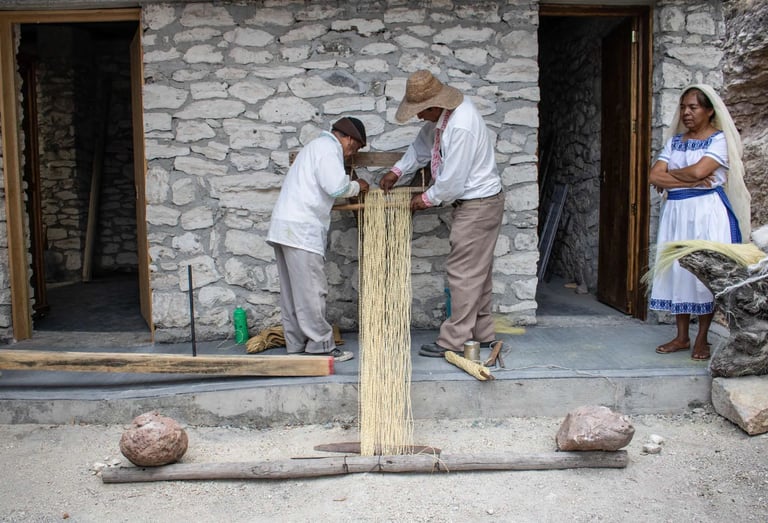
Photo documentation of every stage: maguey harvesting → fiber extraction → cardado → spinning → weaving
Collaborative process mapping with artisans identifying bottlenecks
Research Questions:
What are the current economic models and commercialization chains?
What cultural practices and ancestral knowledge are embedded in ixtle production?
What are the critical pain points preventing artisans from capturing fair value?
What organizational capacities exist or need strengthening?
How do artisans perceive their own work's value vs. market perception?
Context:
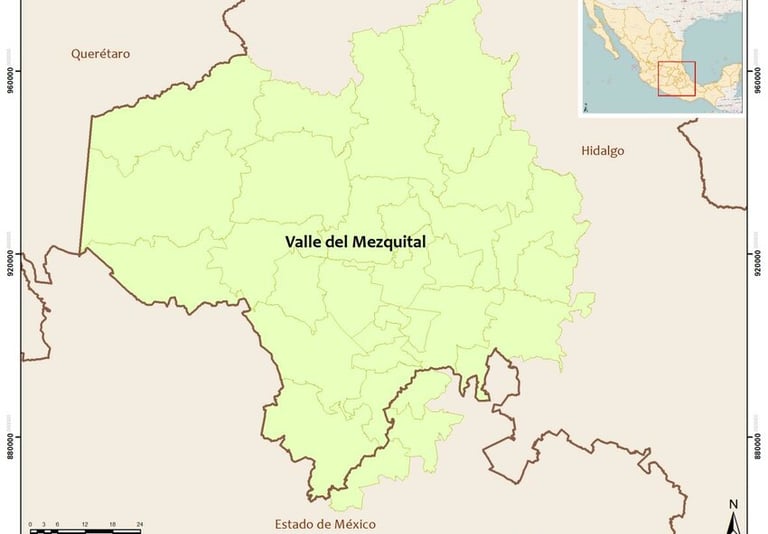
In the Mezquital Valley where traditional crafts represent cultural heritage at risk of disappearance, and where 53.93% of communities in the region face high marginalization, fair trade initiatives become critical both for economic survival and cultural preservation.
Our Impact
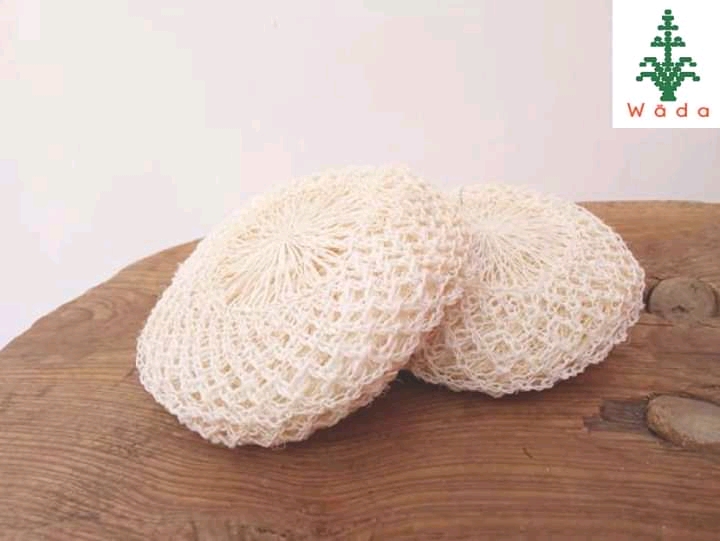
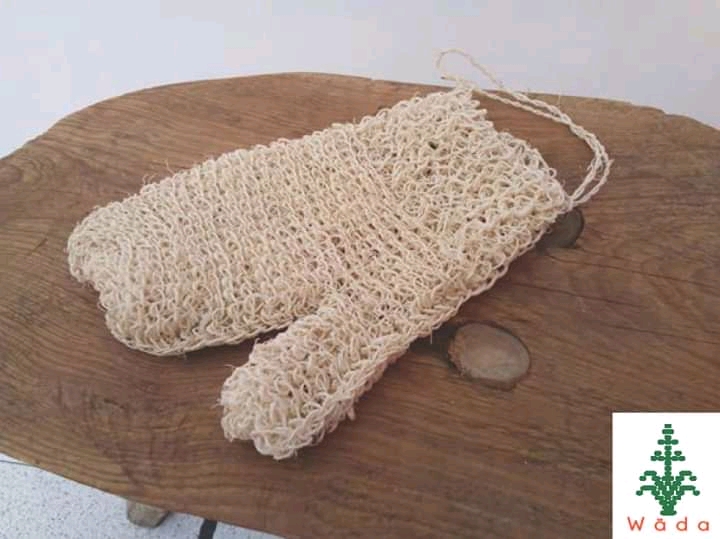
Through 11 months of immersive ethnographic research, I conducted 37 in-depth interviews, facilitated 15+ participatory workshops, and co-designed solutions with the Grupo Wäda artisan cooperative that achieved:
📈 56% increase in monthly sales ($2,700 → $4,200 MXN average)
🤝 37 artisan families empowered (68% women, 32% men)
📚 30+ educational materials created (videos, infographics, printed materials)
🌍 6,000+ people sensitized about fair trade and cultural value
✊ Grupo Wäda consolidated as autonomous organized collective
🎓 100% elimination of extractive intermediaries in 2 direct sales channels


The Socioeconomic Context
Valle del Mezquital, Hidalgo hosts 18,427 Hñähñu (Otomí) indigenous inhabitants in Cardonal municipality alone. The region faces:
53.93% of communities with high marginalization index
Semi-desert climate with water scarcity and limited natural resources
Massive migration to the United States due to economic hardship
Cultural heritage at risk: Traditional maguey-based crafts disappearing
I designed a long-term immersive research protocol combining qualitative depth with participatory validation.
Target Population Profile
37 Artisan Families from 3 Communities:
La Vega (ixtle fiber extraction specialists)
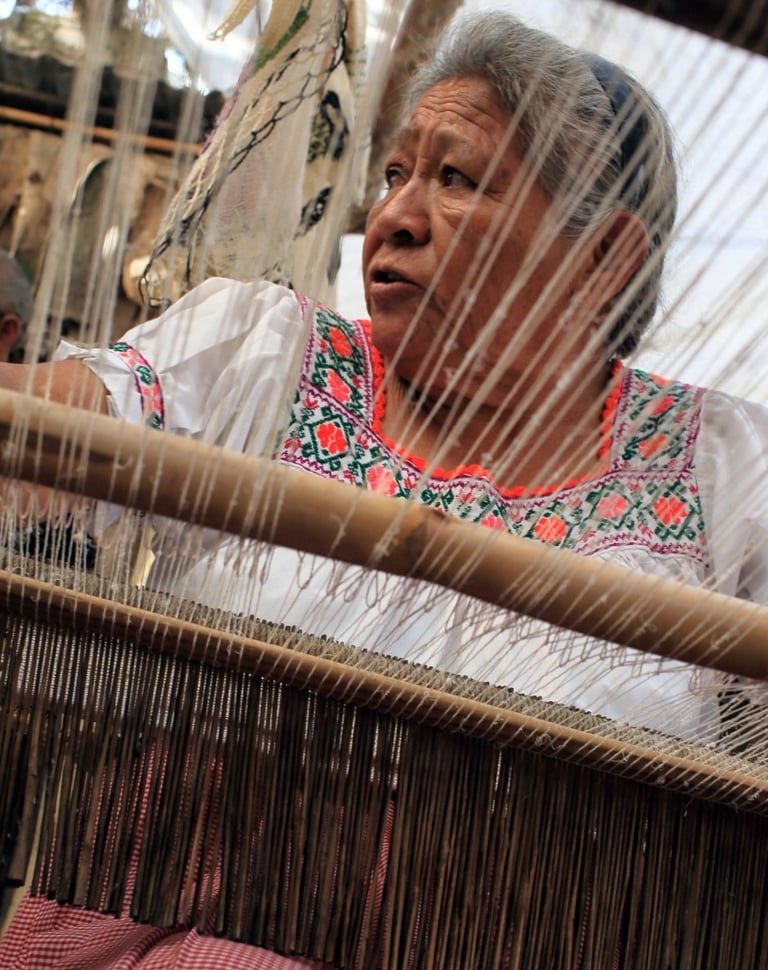
El Decá (Grupo Wäda cooperative: weavers and embroiderers)
Pozuelos (mixed production)
Key Characteristics:
Ages: 25-70 years
Gender: 68% women, 32% men
Context: Missionary catechists, farmers, artisans working in high-stress, high-violence regions
Challenge: Zero prior exposure to fair trade concepts, limited organizational capacity, complete dependency on intermediaries
Cultural Sensitivity Considerations:
Language barriers (Spanish-Hñähñu)
Initial mistrust toward external agents (history of extractive researchers)
Diverse literacy levels and formal education
Strong communal values and collective decision-making traditions
⚠️ PAIN POINT 1: Extractive Intermediary Exploitation
📊 Frequency: 37/37 families (100%)
🔴 Severity: Critical
💼 Business Impact: Direct poverty perpetuation
The Evidence:
Concrete pricing gap: Artisans sold finished ixtle products for $270 MXN; intermediaries resold same products in Mexico City for nearly $400 MXN
Profit extraction: Intermediaries captured $100+ margins (37% markup) without adding value
Unfair pricing logic: Based solely on supply/demand, NOT on:
Years of maguey maturation time
Days/weeks of intensive manual labor per piece
Ancestral knowledge transmission
Cultural significance
💬 "The intermediaries pay us whatever they want. We don't know how much our work is really worth in the city. We just accept what they offer because we have no other option."
— Artisan from La Vega, age 52
Root Cause: Complete lack of direct market access + information asymmetry = power imbalance enabling exploitation.
⚠️ PAIN POINT 2: Cultural Value Invisibilization
📊 Frequency: 37/37 families (100%)
🟠 Severity: High
🎭 Cultural Impact: Heritage erasure risk
The Evidence:
Urban consumers were completely unaware that ixtle products:
Required ancestral processes transmitted generationally
Involved intensive manual labor:
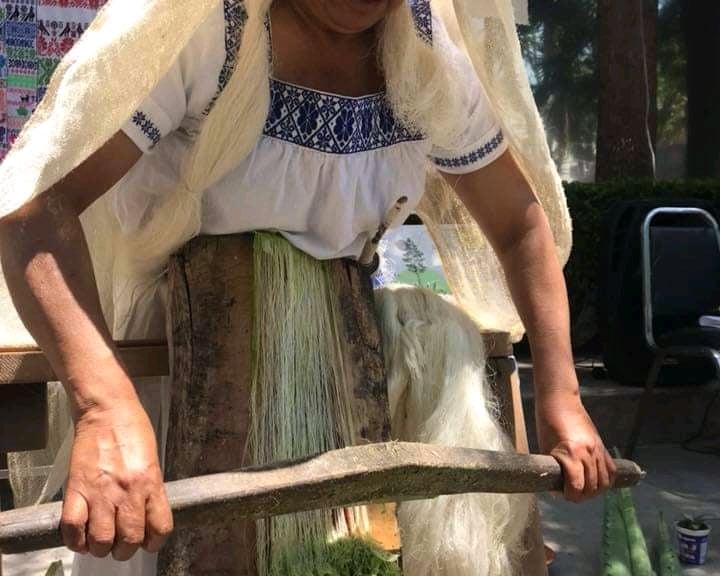
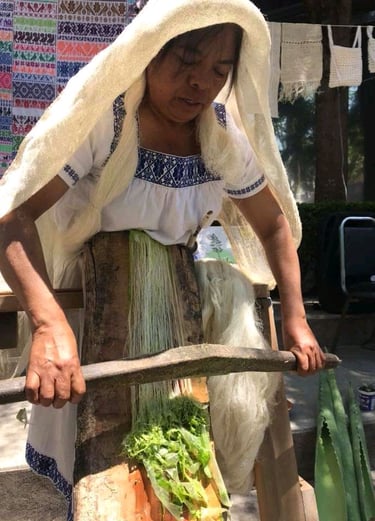
Maguey carving (tallado)
Fiber extraction
Drying (several days)
Carding (cardado)
Spinning (hilado)
Weaving/embroidery
Represented Hñähñu cultural heritage at risk of disappearance
Offered environmental benefits vs. plastics:
Biodegradable
CO₂ fixation
Erosion prevention in semi-desert ecosystem
💬 "People in the city think these bags are just 'rustic crafts.' They don't know we spent a week making each one. They don't know our grandmothers taught us these techniques. They just see a product and want to negotiate the price down."
— Artisan from El Decá, age 47
Root Cause: No storytelling mechanisms to communicate cultural + environmental + labor value = commodification without recognition.
⚠️ PAIN POINT 3: Lack of Collective Organization
📊 Frequency: 37/37 families (100%)
🟡 Severity: Medium-High
💪 Organizational Impact: Limited negotiating power
The Evidence:
Artisans worked isolated, competing against each other for low prices
No collective commercial strategy or shared brand
Limited organizational capacity to negotiate with buyers/institutions
Dependency mindset: Waiting for intermediaries rather than seeking alternatives
💬 "We all make similar products, but we don't work together. Sometimes we even compete for the same intermediary's attention. If we organized, maybe we'd have more power."
— Artisan from Pozuelos, age 38
Root Cause: No tradition of cooperative structures + external exploitation had fostered individualistic survival strategies.
03. Co-Design with Community 🤝
Participatory Solution Development (Dec 2017 - Feb 2018)
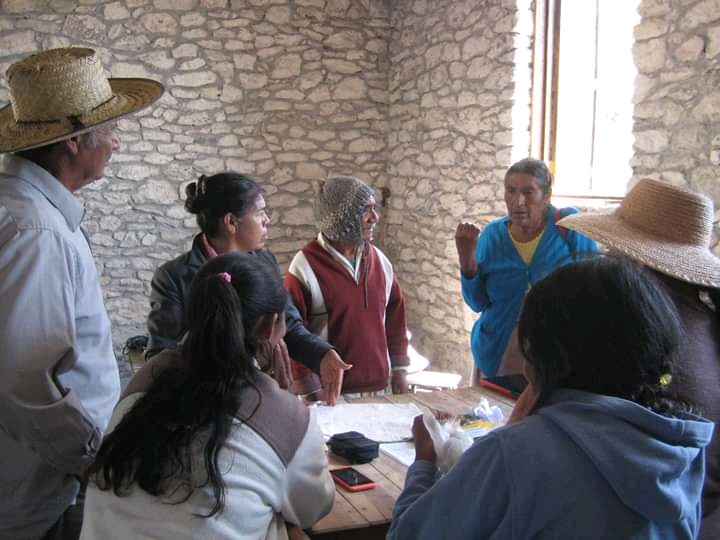
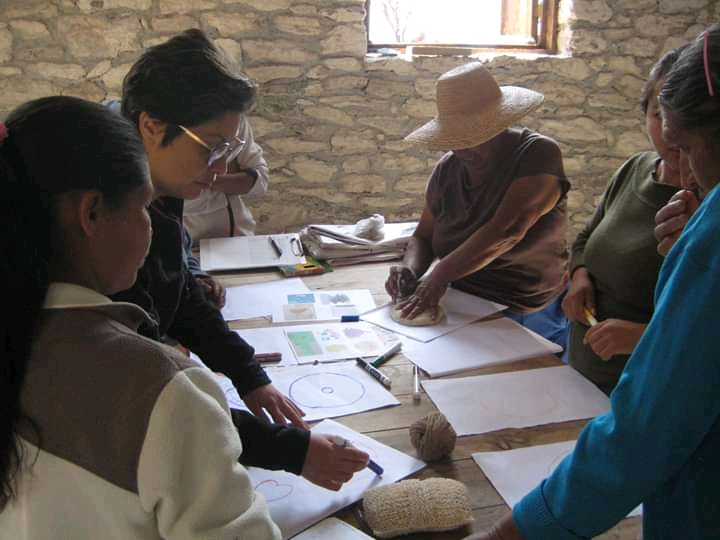
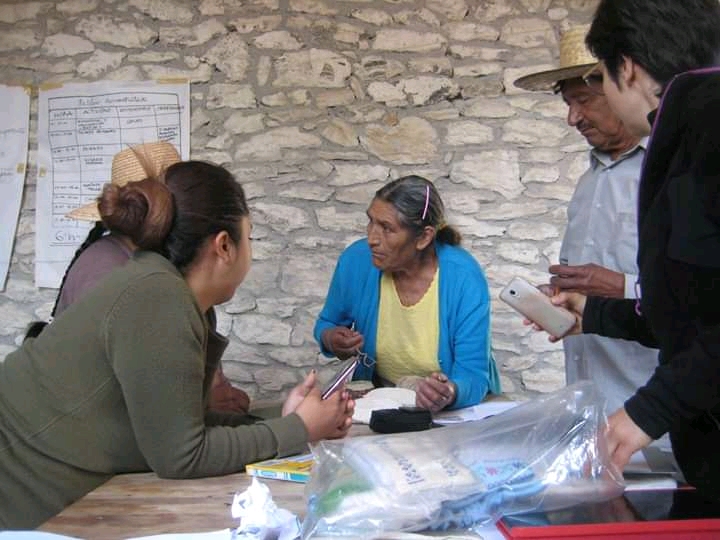
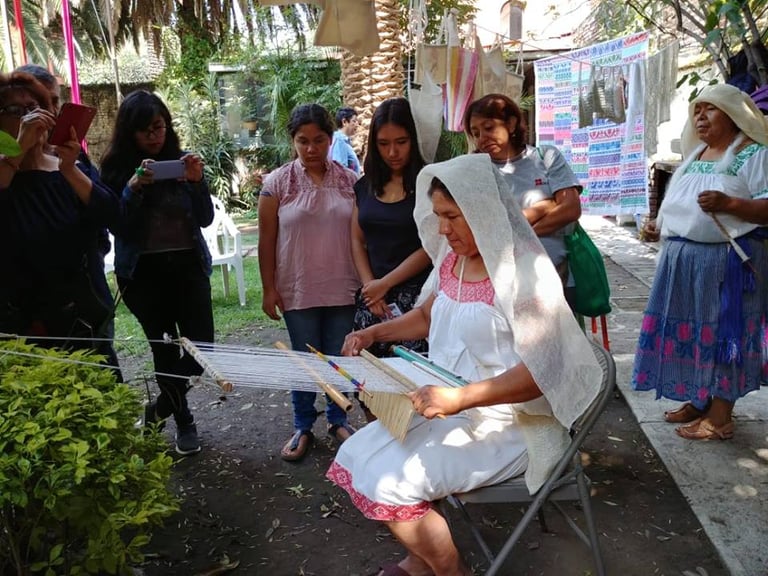
Based on ethnographic findings, I facilitated 15+ participatory workshops with artisans and embroiderers from Grupo Wäda at Taller Xido Ngu in El Decá.
Workshop Themes:
Organizational capacity building
Product costing methodology (including labor time valuation)
Commercialization strategies
Cultural value narrative development
Critical Principle: Solutions were CO-DESIGNED, not imposed externally.
Solutions Co-Created by Artisans
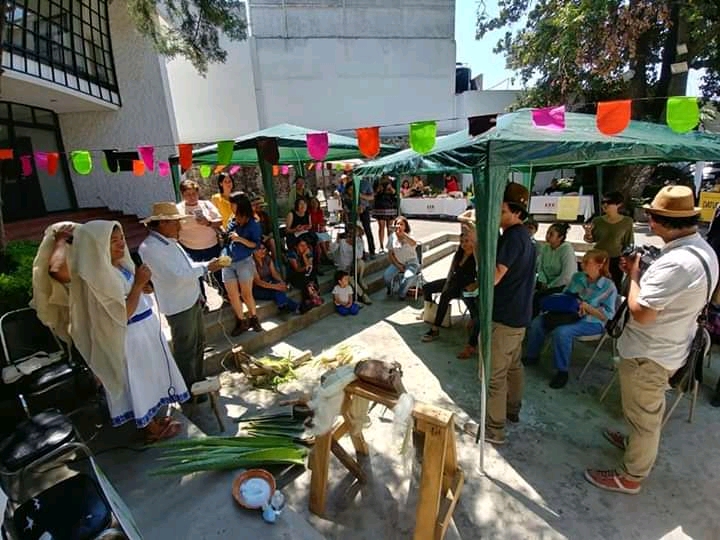
1. Experiential Demonstrative Workshops
Artisan Proposal:
💬 "People need to see with their own eyes how difficult it is to extract ixtle. Then they'll understand why it costs what it costs."
Co-Designed Solution:
Organize live demonstration workshops in Mexico City
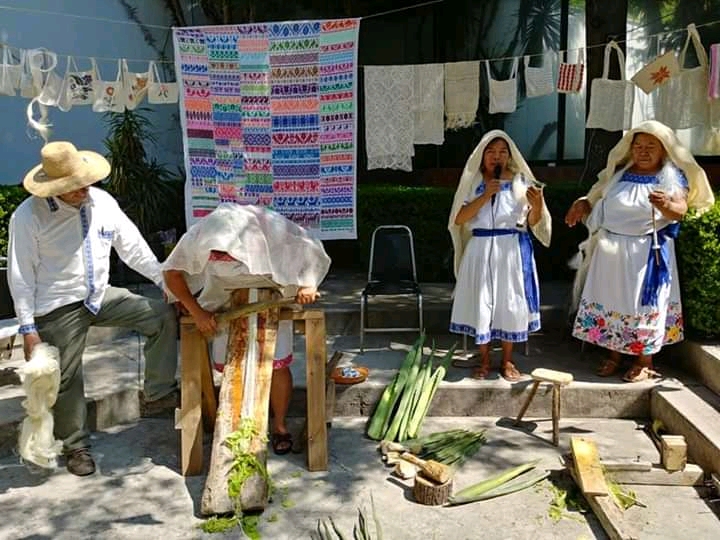
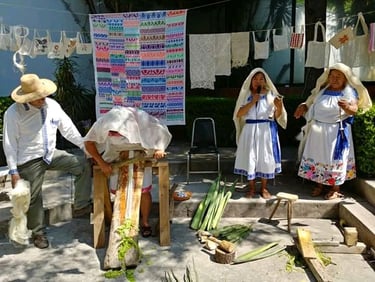
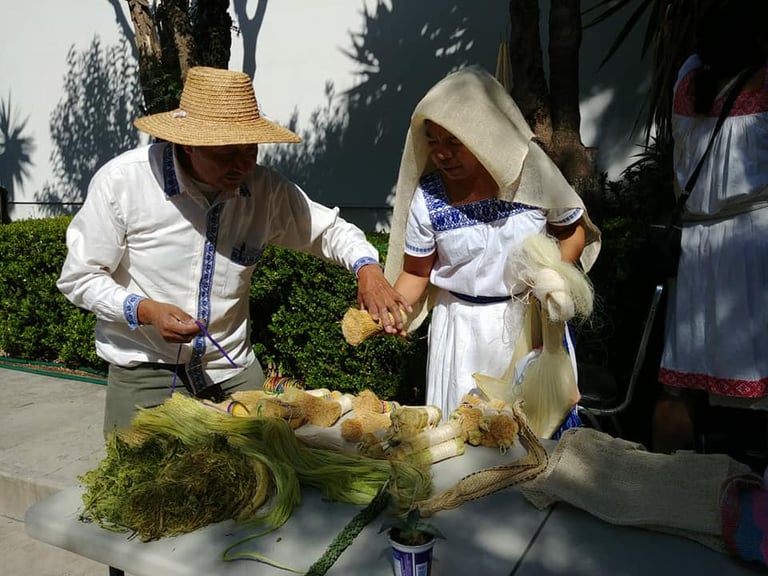
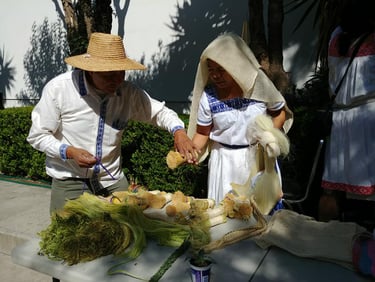
Artisans would showcase carving, extraction, carding, and spinning in real-time
Urban consumers witness labor-intensive processes firsthand
My Role:
Logistical coordination with CDMX fair-trade spaces
Pedagogical itinerary design
Alliance building (e.g., Fundación ADO for transportation)
Management and program planning
2. Consolidation of Grupo Wäda as Organized Collective
Identified Need:
Strengthen collective organization to negotiate better prices and execute joint projects
My Role:
Facilitation of organizational capacity workshops
Documentation of collective agreements
Support in collaborative planning processes
Outcome:
Grupo Wäda transitioned from informal gathering → structured cooperative
Developed autonomous decision-making capacity
Gained confidence to design and execute projects independently
3. Product Diversification with Added Value
Artisan Innovation:
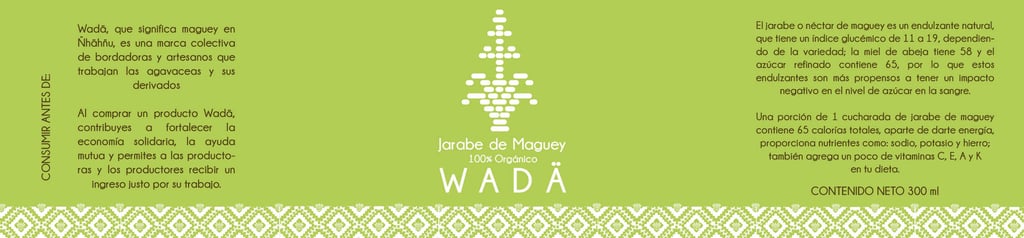
Produce maguey syrup (processed aguamiel) as additional commercializable product
My Role:
Professional label design for commercialization
Coordination of sanitary permits
Connection with potential buyers in conscious consumer networks
4. Cultural Storytelling Strategy
Co-Creation Process:
Artisans narrated stories and legends about maguey and traditional practices
I documented these narratives audiovisually
Integrated into educational materials to humanize products
Goal: Emotional connection between urban consumers and artisan producers
💬 "When people know our stories—when they see our faces and hear why maguey is sacred to us—they stop haggling. They start asking questions. They want to support us."
— Artisan from Grupo Wäda, age 55
Phase 3: Creating Educational Materials (Mar-Jun 2018)
To combat cultural invisibilization, I designed and produced 30+ multi-format educational materials in collaboration with graphic designers and artisans.
Audiovisual Production (3 videos + multiple GIFs):
"From Maguey to Ixtle: A Paused Production Process" (8-minute documentary)
Documents entire chain: maguey harvesting → carving → fiber extraction → transformation
Features artisan voices explaining each step
Goal: Dimensionalize and value Hñähñu artisan labor
Animated GIFs for social media
Showcasing carding and spinning techniques
Short-form content for digital engagement
Digital & Print Infographics (5+):
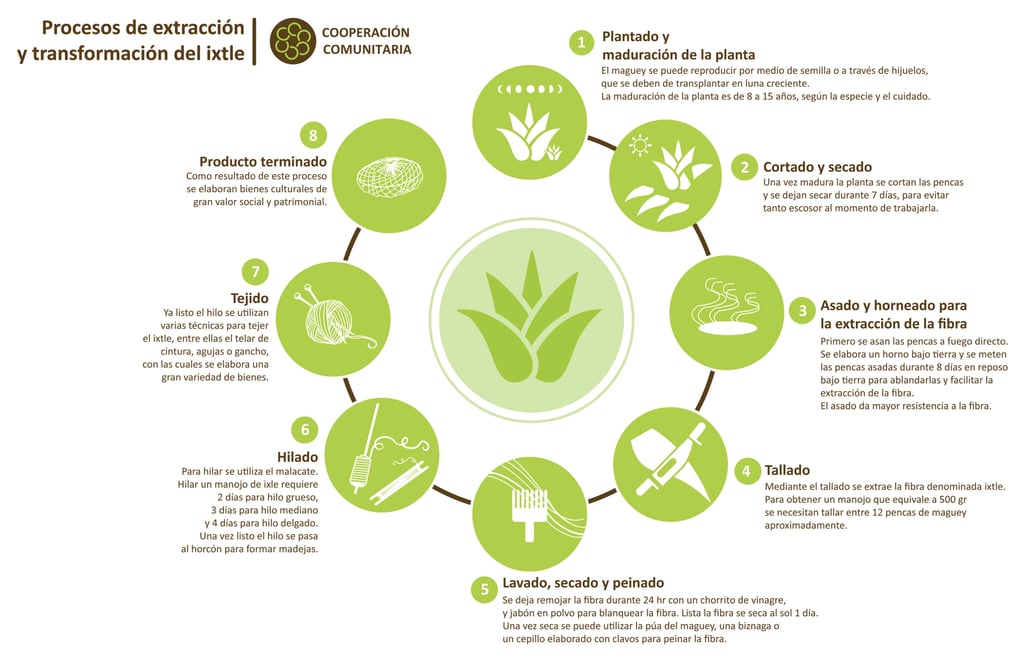
"Extraction and Transformation Process of Ixtle" (step-by-step illustration)
"The Maguey: Environmental and Sociocultural Importance for Valle del Mezquital"
Ecological benefits: CO₂ fixation, erosion prevention
Comparison vs. plastic alternatives
Hñähñu Cultural Heritage Infographic
Fair Trade Principles & Impact
Print Materials (20+ pieces):
Educational trifolds about ixtle and derivatives
Point-of-sale posters with value narrative
Professional labels for maguey syrup (communicating origin, artisan process, benefits)
Dissemination materials about fair trade initiative
Photographic Archive:
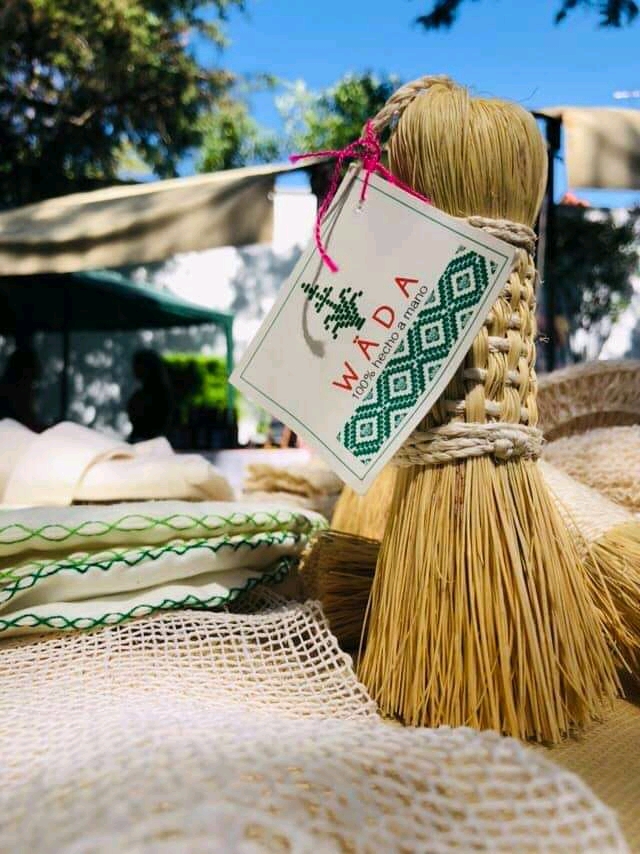
200+ high-quality photographs documenting processes, artisan portraits, Valle del Mezquital landscapes
Usage: Exhibitions, social media, dissemination materials
04. Implementation & Market Access 📚
Expo-Sales: Direct Market Access in Mexico City
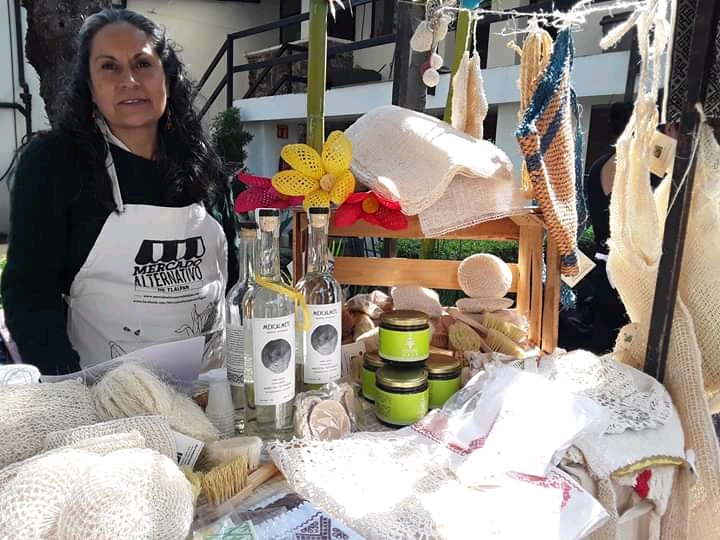
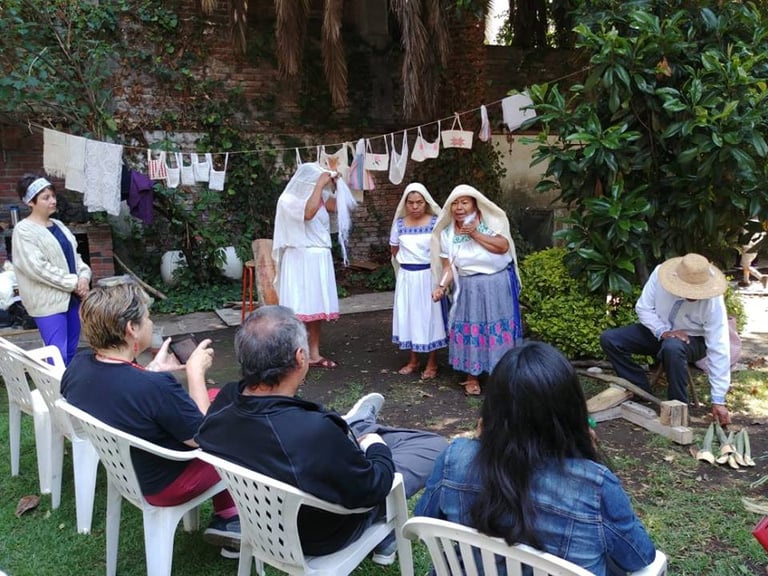
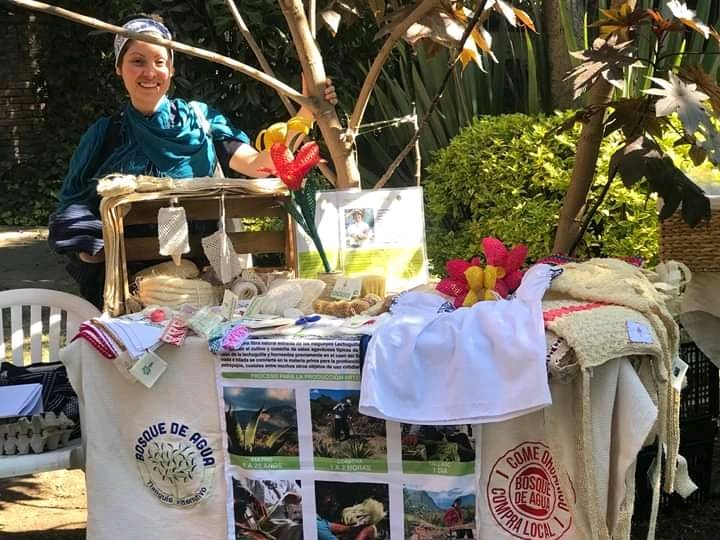
Event 1: Ixtle Demonstrative Workshop (May 19-20, 2018)
Location: Mexico City (Mercado Alternativo Tlalpan + Tianguis Bosque de Agua, Coyoacán)
Participants: Artisans from La Vega, El Decá, and Pozuelos (Grupo Wäda)
Format: Live demonstration of labor-intensive processes + direct sales
Innovation: Artisans personally explained their work, humanizing the products
Alliances: Fundación ADO (logistics/transportation support)
Impact:
300+ attendees engaged directly with artisans
Direct sales without intermediaries—artisans captured full product value
Sensitization about fair trade principles
Reduced haggling: Consumers who witnessed processes paid fair prices without negotiation
💬 Urban Consumer Testimonial:
"I had no idea that an ixtle bag took days of work. Seeing the process live made me understand why it's worth what it's worth. This is art, not just a product."
Event 2: Knowledge Transfer Workshop in Taller Xido Ngu, El Decá
Format: 2-day workshop facilitated BY Hñähñu artisans FOR producers from Tlaxcala (Grupo Pulmex)
Goal: Horizontal knowledge transfer between artisan communities
My Role:
Pedagogical itinerary design
Logistical coordination
Facilitation of knowledge exchange
Outcome:
Strengthened teaching capacities of Hñähñu artisans (positioned as instructors/experts)
Artisans gained confidence recognizing their expertise had value beyond their own community
💬 Artisan Facilitator:
"Teaching other artisans made us realize we know a lot. Before, we thought our work wasn't important, but now we see other communities want to learn from us."
Continuous Commercial Management
Throughout March-June 2018:
Purchase-sale-distribution: I intermediated commercialization of cultural goods in CDMX through Cooperación Comunitaria AC
Monthly monitoring: Sales tracking, buyer feedback, strategy adjustments
Direct producer-consumer connections: Facilitated direct contact for custom orders
Critical Difference: Unlike extractive intermediaries, Cooperación Comunitaria operated on fair trade principles—transparent pricing, producer education about market value, profit-sharing aligned with labor contribution.


LET'S DO SOMETHING TOGETHER
Get in touch!
You didn't come this far to stop. The best is still ahead.